The whole exhibition rests on a play on words. In English, Seen is the past participle of “to see”: something that has already been looked at. In German, the same word is the plural of See and means “lakes”. The spelling is identical; the meaning is not. Guidi works precisely in the space between these two senses. The works are less concerned with the object of vision than with the moment in which we realise we are looking. It is a minimal shift, yet enough to make something that seemed familiar only a moment before suddenly strange: a tree, the water, a sound, our own presence in a place.
Anna Castelli’s critical text begins with the image of the lake as an ambiguous surface. A lake reflects the world upside down and in motion, but keeps hidden whatever lies beneath. A breath of wind is enough to break the reflection and open up a depth that cannot be measured. The text opens with a passage from Cesare Pavese’s Dialogues with Leucò.
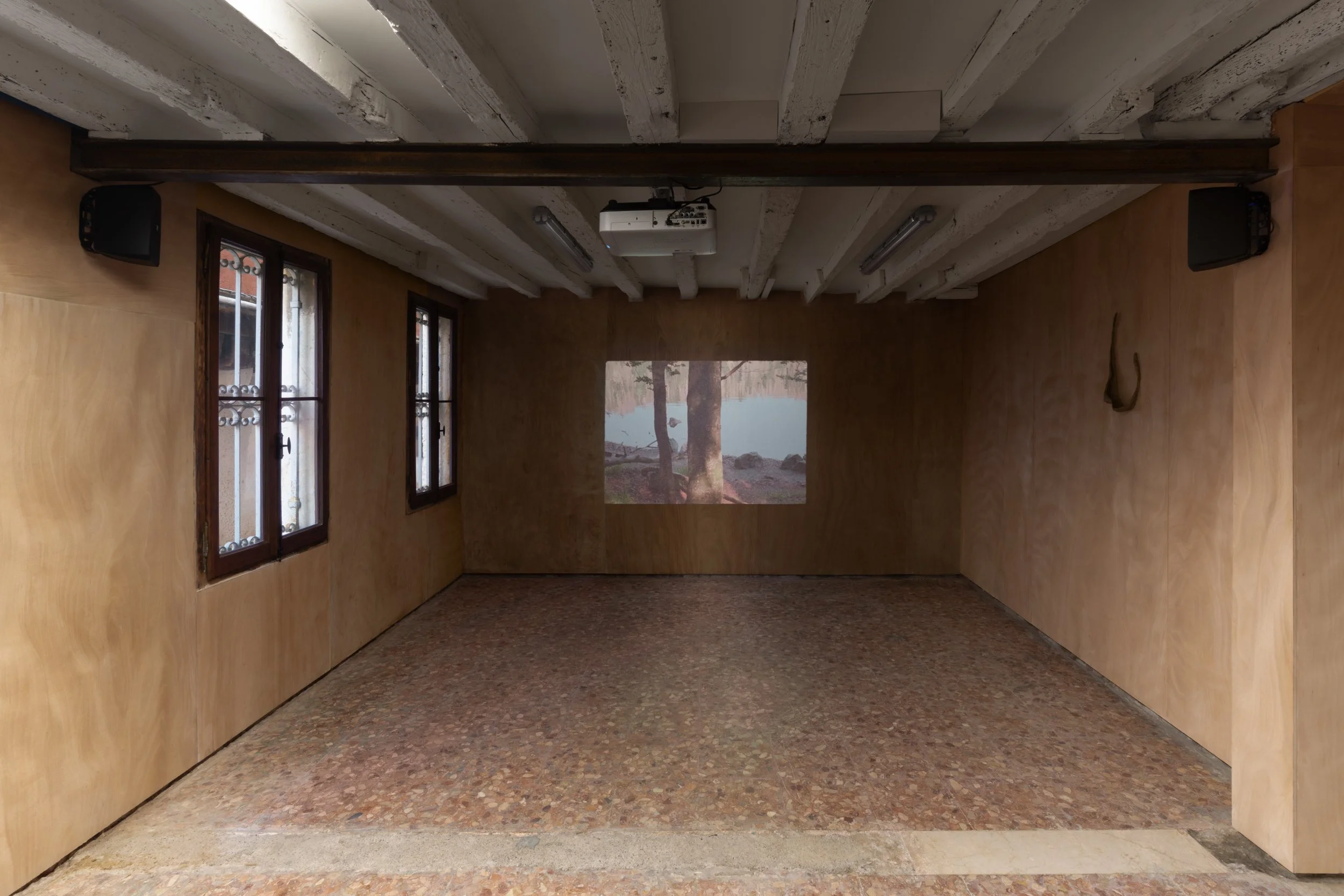
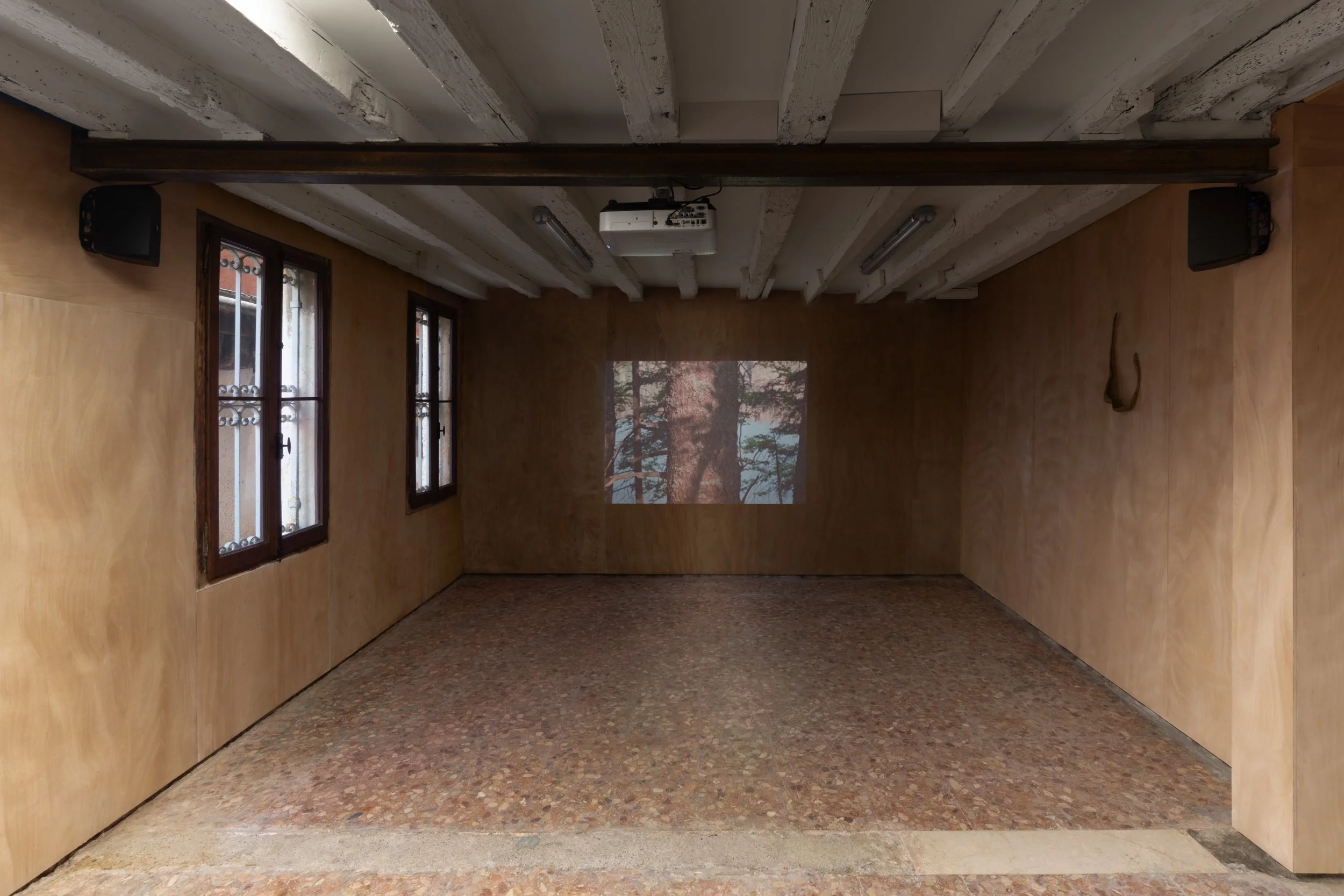
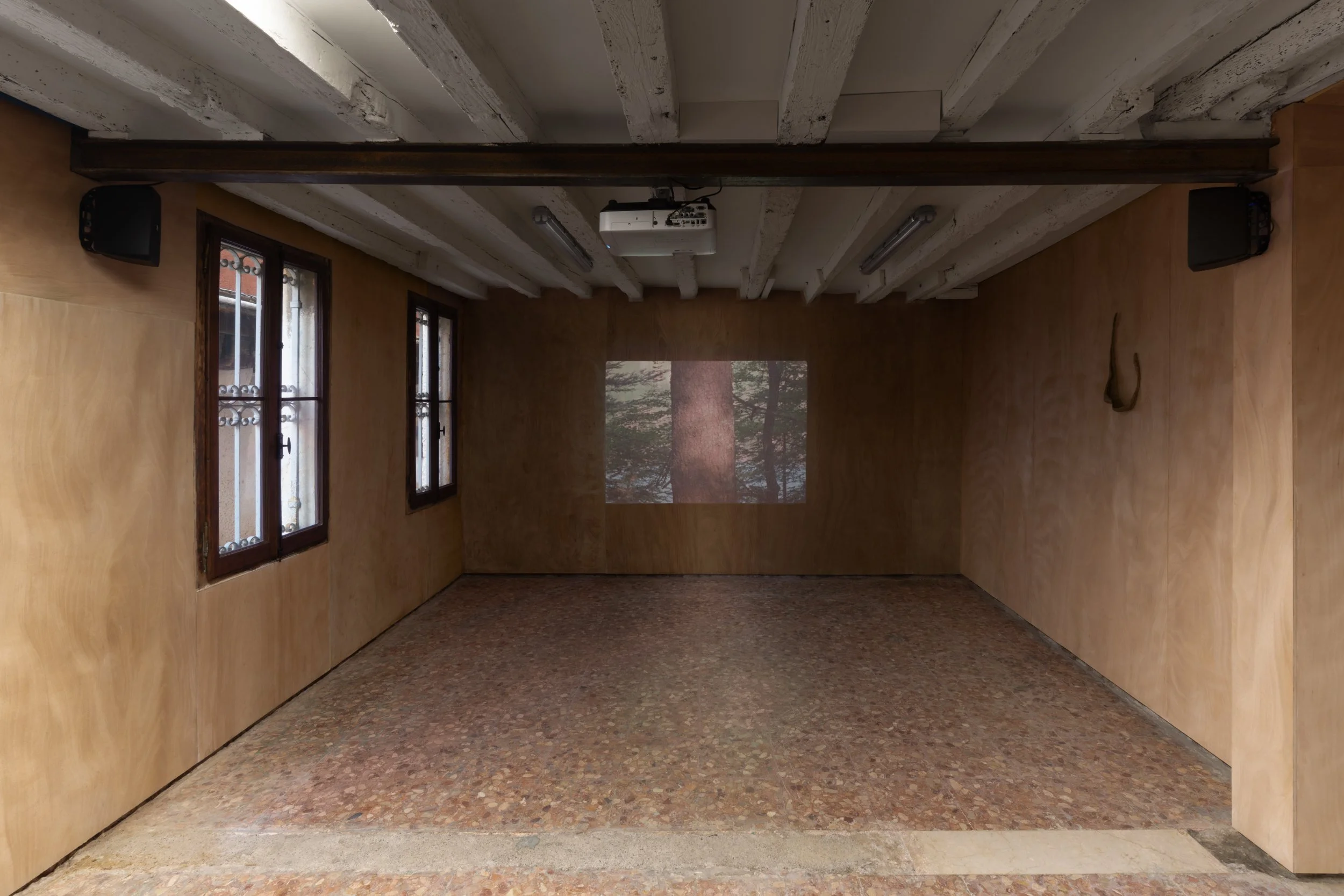
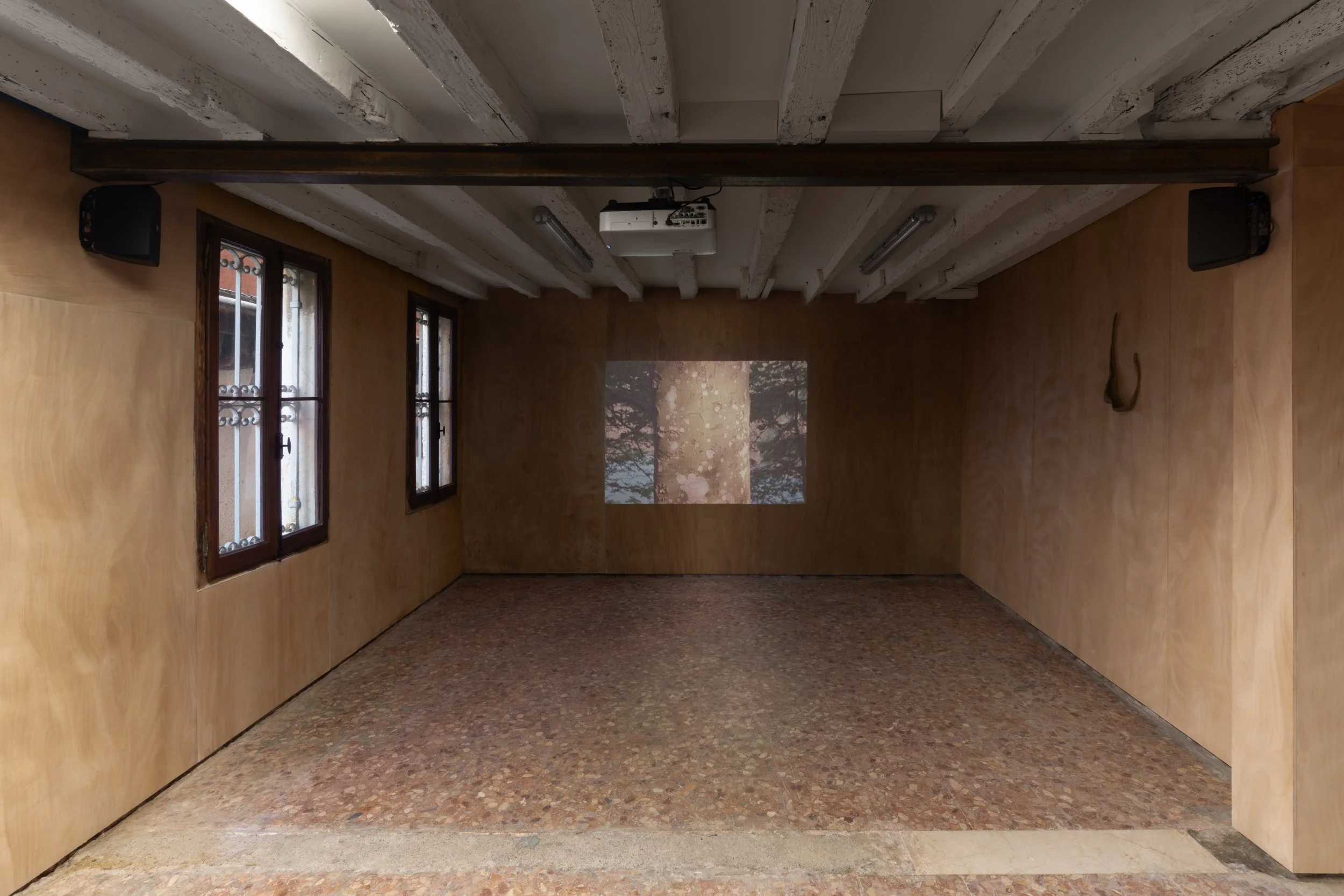
At the heart of the exhibition is a 16 mm film, shot around a perfectly circular lake in the Black Forest. The camera follows its shore like the hands of a clock, framing the tree trunks at eye level as light filters through the leaves and settles on the water. The film is projected in a loop, so the journey around the lake begins again and again: we pass the same elements once more, yet in the meantime they have changed. The film is set in full spring, and still everything retains a sense of suspension and waiting. The calm is broken by an unsettling sound, somewhere between a newborn’s cry and an animal call, whose source is not immediately clear.
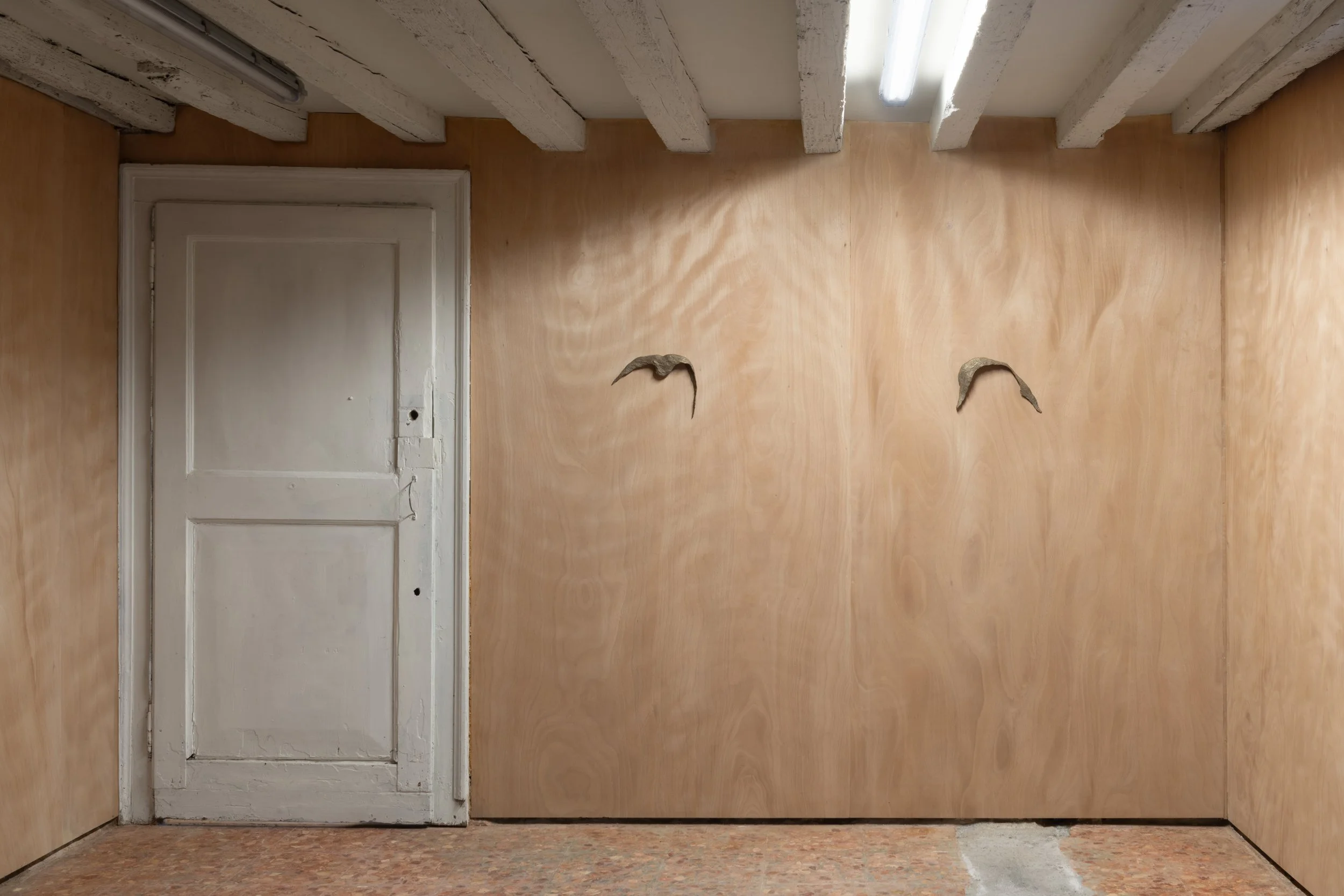
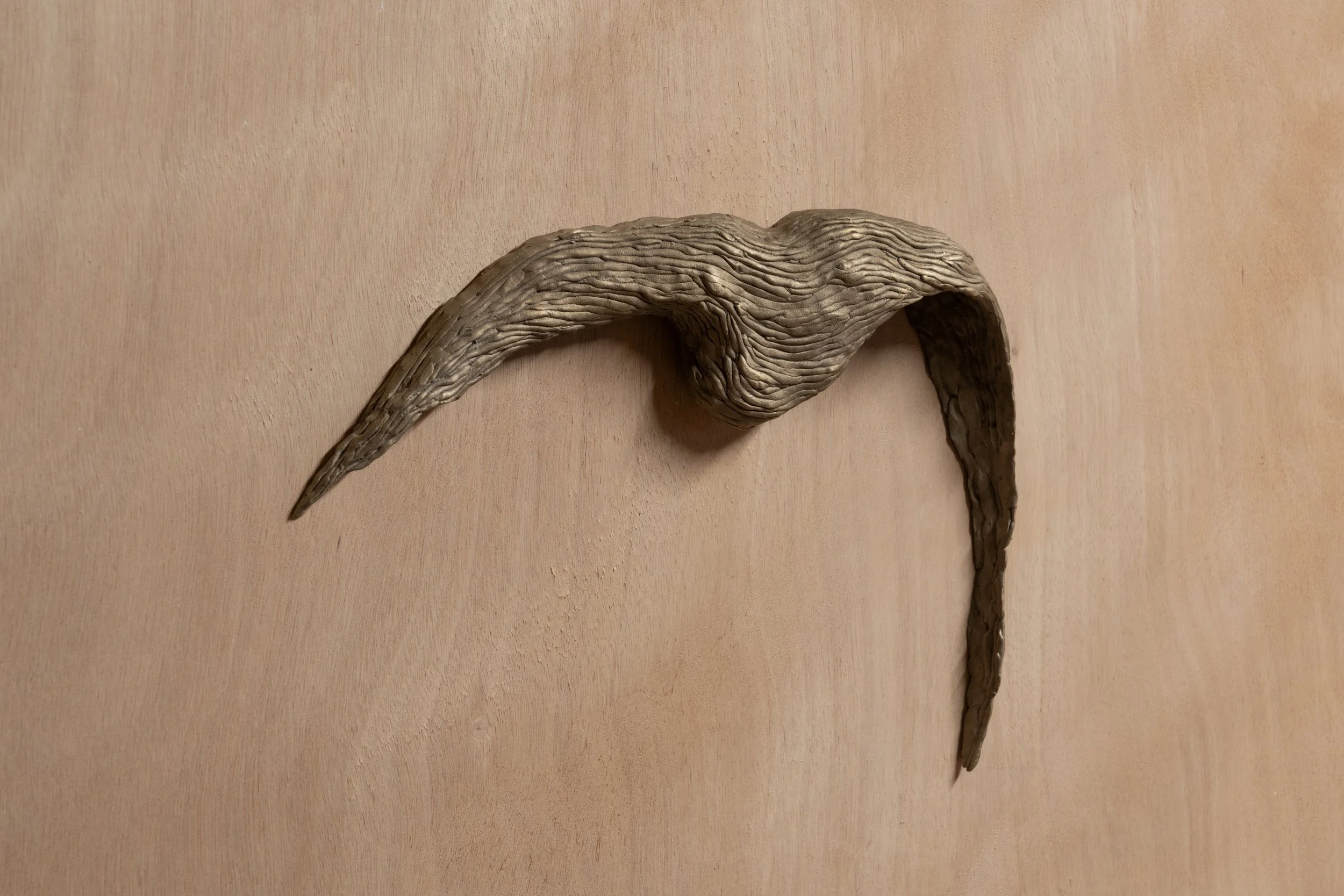
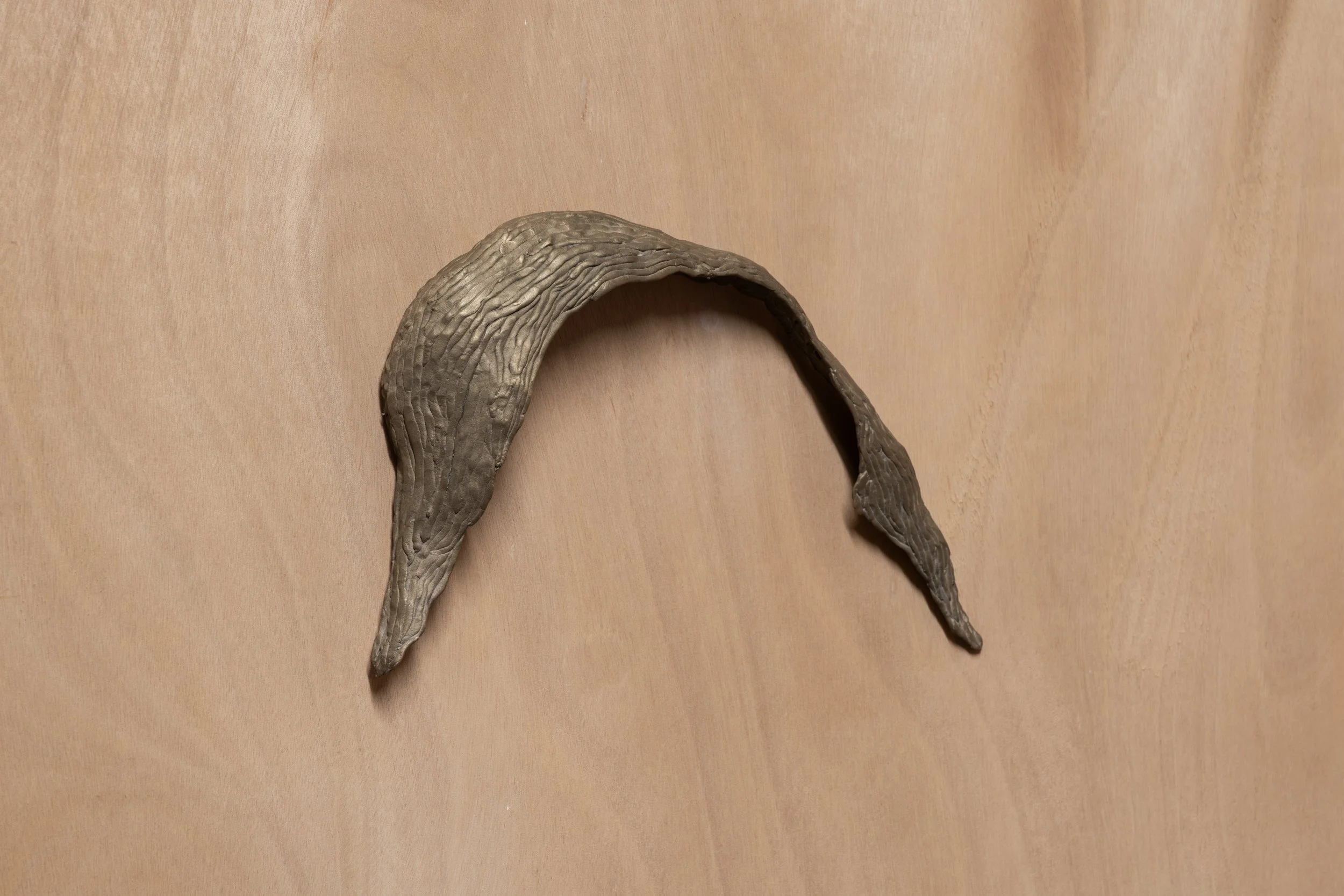
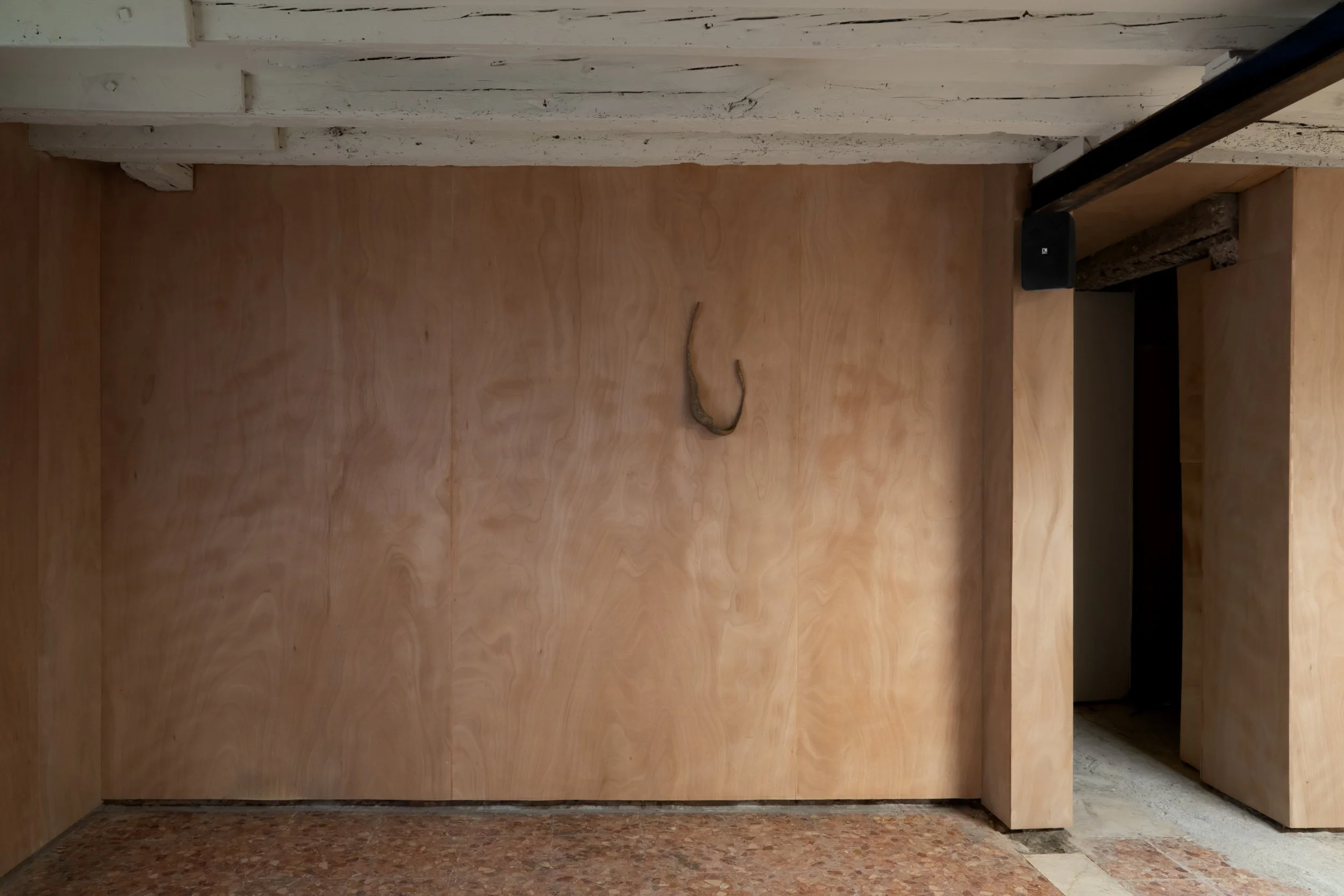
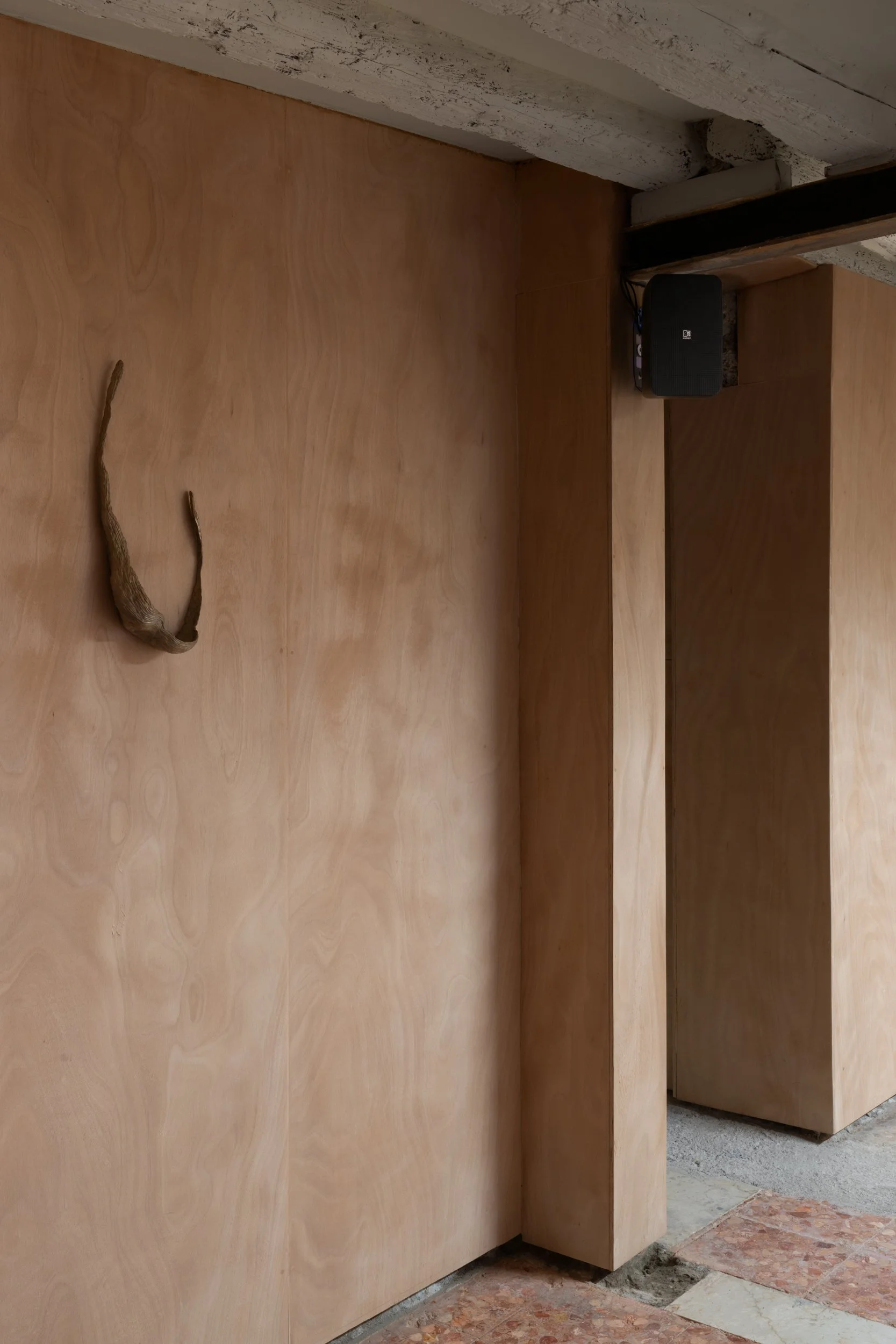
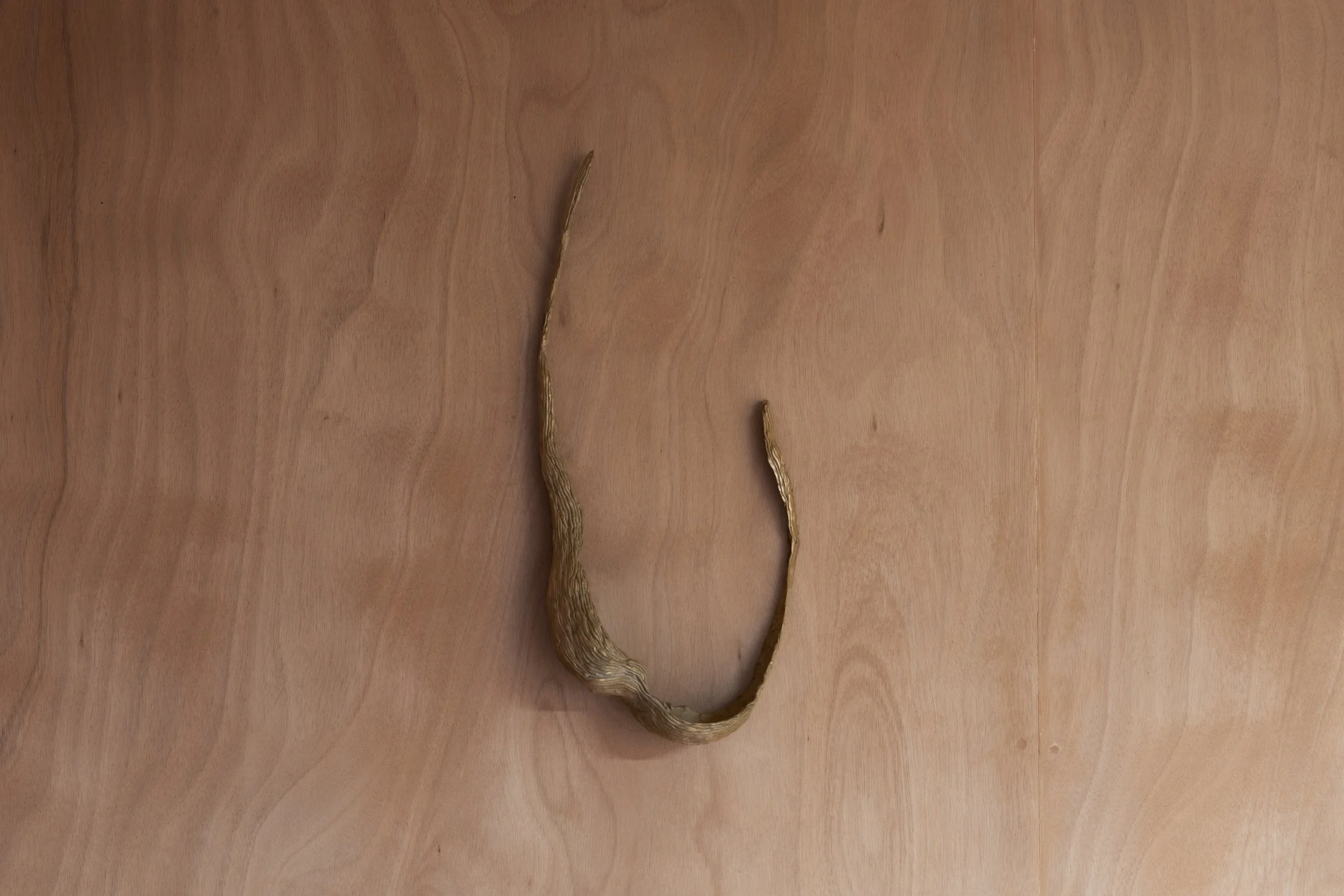
In dialogue with the film are three sculptures: bronze forms that curl around a void, with a profile that is at once anatomical and architectural. They recall swallows’ nests, small open shelters that always leave the possibility of a return. They are made using the lost-wax technique: the wax is applied in layers, and each layer must harden before the next. The form thus grows through slow accumulation, and the time of waiting remains inscribed in the bronze.
Film and sculptures therefore speak the same language. Both stand on a threshold: between what has already happened and what we have yet to recognise, between a form that reveals itself and something that keeps slipping away. The result is a spare, quiet exhibition with only a few works, built on duration and on the act of looking.
Satine - Venice - Italy
Exhibition by Giulia Guidi
Directed by Camilla Pagliano and Silvia Stevi
Photos for Satine and Giulia Guidi