Palazzo Diedo stands in the Cannaregio district, along the Fondamenta Diedo. Built in the early eighteenth century for the patrician Diedo family to a design attributed to Andrea Tirali, over time it housed public functions — serving also as a courthouse and a school — before being purchased in 2022 by the collector and philanthropist Nicolas Berggruen.
After an extensive restoration, it reopened in 2024 as the home of Berggruen Arts & Culture, the largest new space for contemporary art opened in Venice in the past decade.
The palazzo's programme has a distinctive feature: between 2023 and 2025, a series of international artists were commissioned to create permanent interventions, realised in direct dialogue with the architecture and with Venetian artistic crafts.
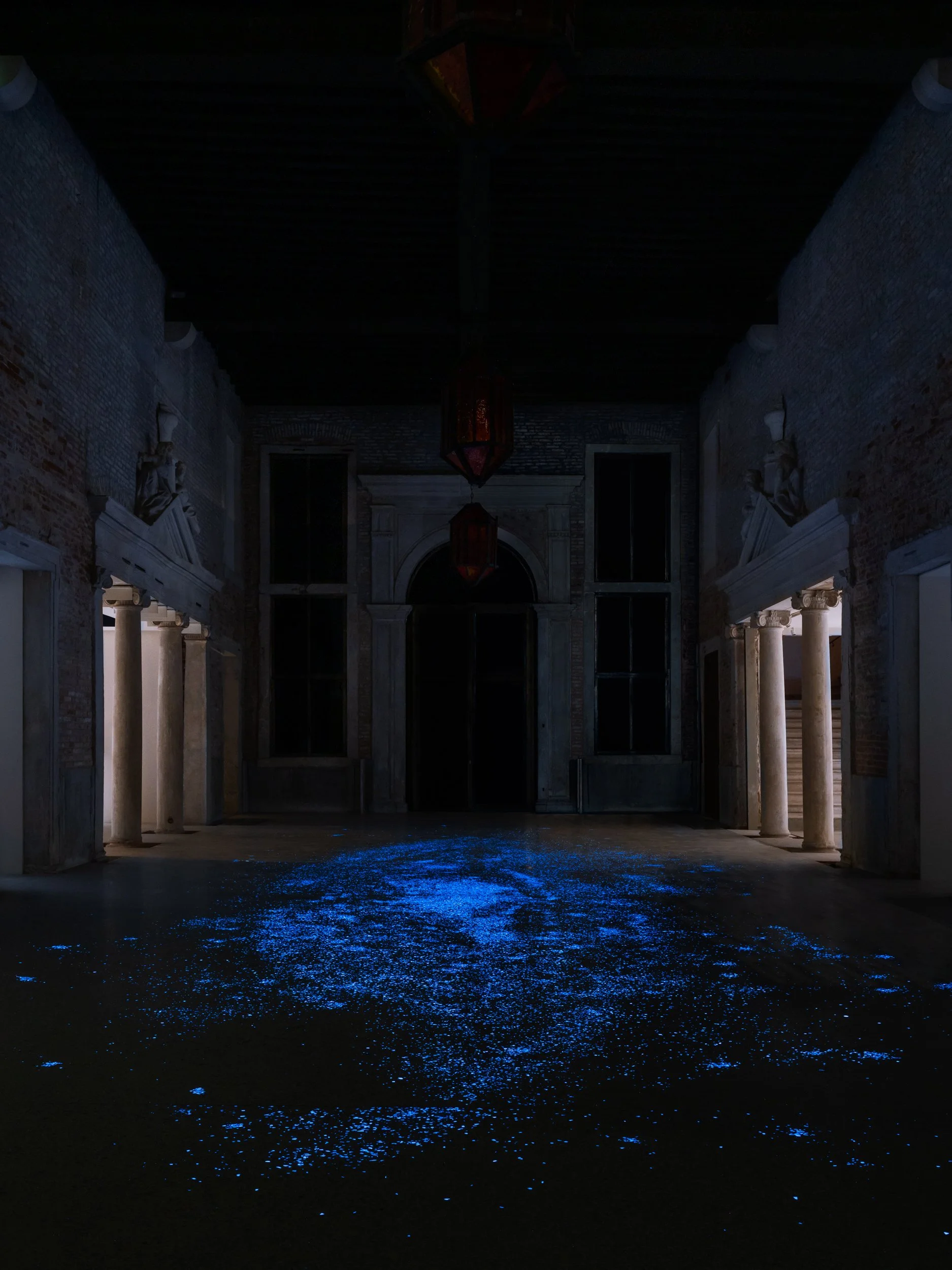
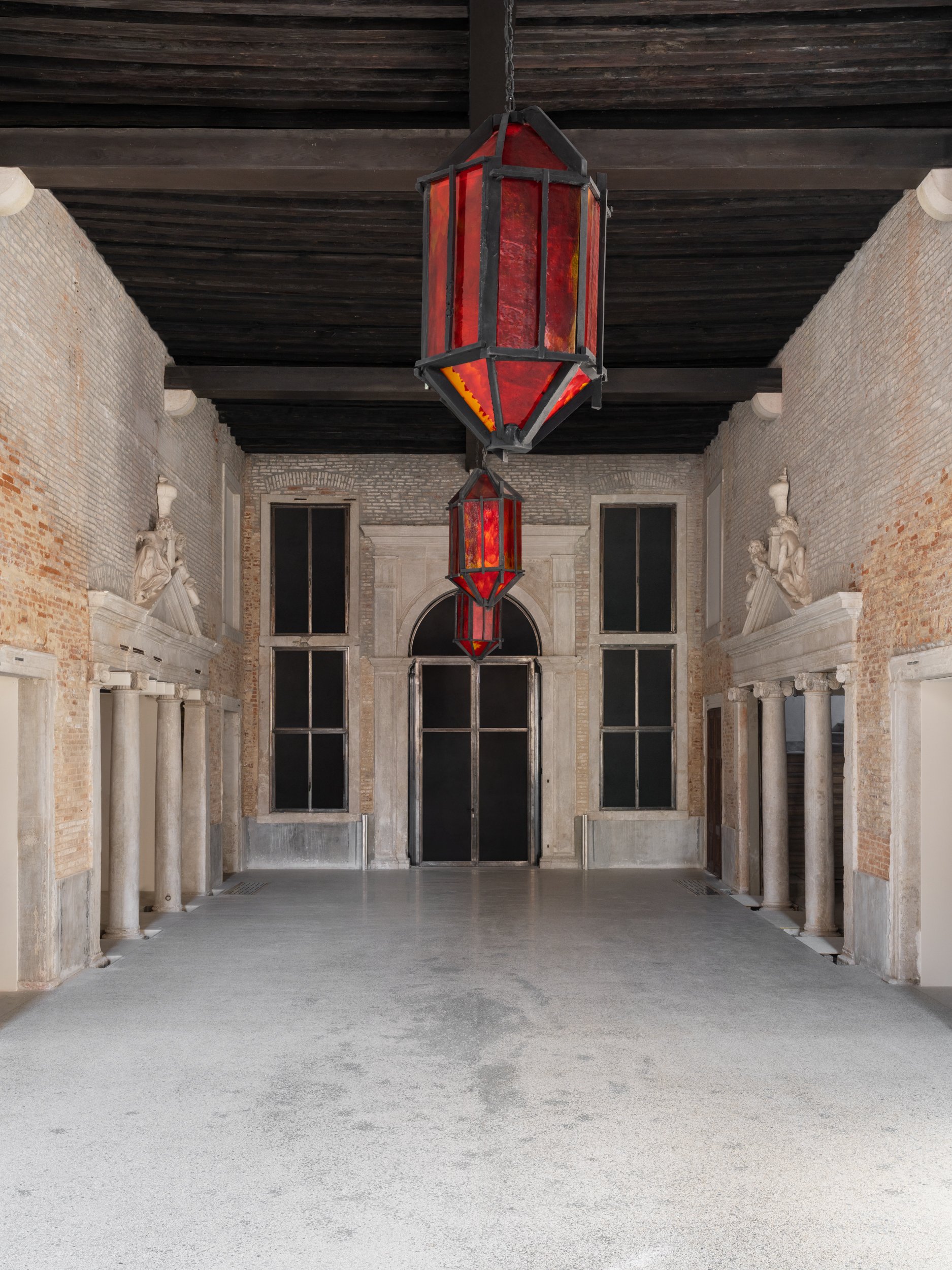
Untitled (Floor) belongs to this cycle. The work is by Piero Golia; it was conceived for the central hall of the piano nobile and presented in April 2025, becoming part of the permanent collection.
It was executed using the traditional Venetian terrazzo technique: fragments of marble and mother-of-pearl scattered by hand onto fresh mortar, then polished. The process, which took a long time, remained visible to the public while the palazzo was open, turning the worksite itself into part of the work.
Its true nature, however, is revealed only in the absence of light.
Embedded in the mixture are luminescent elements which, in the dark, bring out on the floor a design that is invisible during visiting hours.
By day the work appears as one Venetian terrazzo among others; its complete image exists only when the palazzo is empty.
It is a mechanism typical of Golia's work, built on irony and suspension: the visitor walks on a work they can never truly see, and the floor the most functional and least observed element of a palazzo becomes the keeper of a secret.
Palazzo Diedo - Berggruen Arts & Culture - Venice - Italy
Project by Piero Golia
Photos for Piero Golia and Marco Cappelletti